In December 2025, at its 20th session in New Delhi, UNESCO's Intergovernmental Committee for the Safeguarding of the Intangible Cultural Heritage inscribed Kithul Madeema/Kithul Kapeema, an ancient indigenous technology for tapping Kithul in Sri Lanka on the Representative List of the Intangible Cultural Heritage of Humanity (decision 20.COM 7.b.40). It recognises the living craft, not any product or brand.
What was inscribed
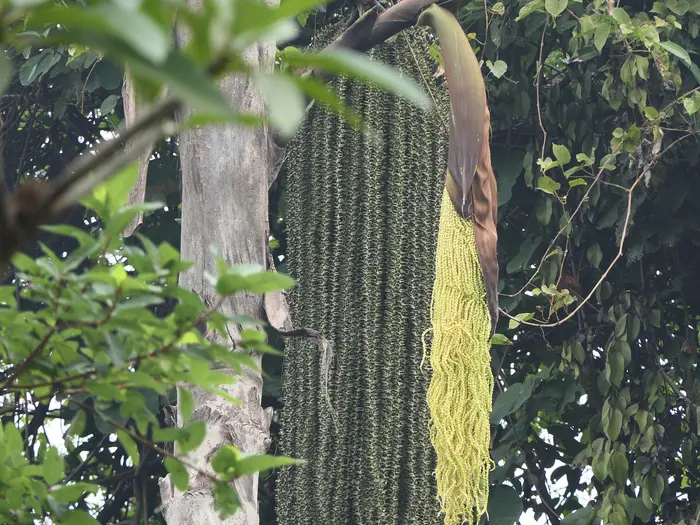
Kithul Madeema and Kithul Kapeema are Sinhala names for the craft of tapping the kithul palm (Caryota urens) for its sap. UNESCO's listing describes tappers in rural villages who climb the palm on a ladder, wrap the flower stalk with vine, cut it with a tapping knife and collect the sap daily. The sap is filtered and boiled for several hours into kithul treacle, and also made into jaggery, a fresh drink, vinegar and fermented drinks.
The listing also records the knowledge and customs around the work, including traditional beliefs, tree worship and practices for storing the sap, and how kithul products are shared at ceremonies, festivals and gatherings. "Traditionally, men collect the sap and women process it," it notes. Most learning still happens informally at home, with some training offered by village cooperatives and government programmes.
Why it matters
The Representative List exists to make living traditions more visible and to encourage their safeguarding. In Sri Lanka, kithul tapping has long been income for families at the edge of the rainforest. Studies of communities around Sinharaja describe kithul as a key livelihood, and one that does not require clearing forest.
The craft is also under pressure. Tapping is hard and dangerous, prices paid at the farm gate have been low, fewer young people are learning it, and treacle adulterated with cane sugar undercuts honest producers. Recognition from UNESCO puts a spotlight on all of this.
What the listing does not mean
- It is not a quality mark, certification or geographical indication. It does not apply to any particular product, producer or brand.
- It does not mean a given bottle of treacle was made using the traditional craft, or is pure. Only the producer's sourcing and testing can show that.
- Companies cannot use UNESCO's name or emblems to suggest endorsement without UNESCO's written authorisation.
Ecoroots is not affiliated with UNESCO. We refer to the inscription because it describes the craft our tappers practise.
Two UNESCO recognitions, one place
Our kithul comes from the villages around Sinharaja Forest Reserve, which UNESCO inscribed on the World Heritage List in 1988 as Sri Lanka's last viable area of primary lowland tropical rainforest. It has been a UNESCO Biosphere Reserve since 1978. We source from village home gardens and smallholdings around the reserve, never from inside it. Read about Sinharaja and our villages.
How buyers can support the craft
The most direct way is to buy genuine kithul, traceable to the people who tapped it, at a price that makes the work worth doing. That is the whole of our business model: we buy straight from tapping families, check every batch for adulteration, and pay for quality rather than volume.
Questions
When was kithul tapping added to UNESCO's list?
In December 2025, at the 20th session of UNESCO's Intergovernmental Committee for the Safeguarding of the Intangible Cultural Heritage, held in New Delhi (decision 20.COM 7.b.40).
What is Kithul Madeema?
Kithul Madeema/Kithul Kapeema is Sri Lanka's traditional craft of tapping the kithul palm (Caryota urens) for sap, which is boiled into kithul treacle and jaggery.
Is kithul treacle a UNESCO-certified product?
No. UNESCO recognised the tapping craft, not any product or brand. The listing is not a quality mark or certification.
Where in Sri Lanka is kithul tapped?
Kithul grows in Sri Lanka's wet zone, in forests and village home gardens. Ecoroots sources from villages around the Sinharaja Forest Reserve.
Sources
- UNESCO Intangible Cultural Heritage — Kithul Madeema/Kithul Kapeema (2025)
- UNESCO World Heritage Centre — Sinharaja Forest Reserve
- De Zoysa (1992), kitul as a livelihood for forest-fringe communities, Principes
- A study on the practice of adulteration of kitul sap products in Sri Lanka, Sri Lanka Journal of Social Sciences

Bring genuine Sinharaja kithul to your market.
Tell us the product, pack format, volume and destination. We'll reply with a specification, availability and a quotation. Samples can be arranged for qualified buyers.